Flemish Translation Services for Business and Trade.
16 February, 2026· Article by David Brown

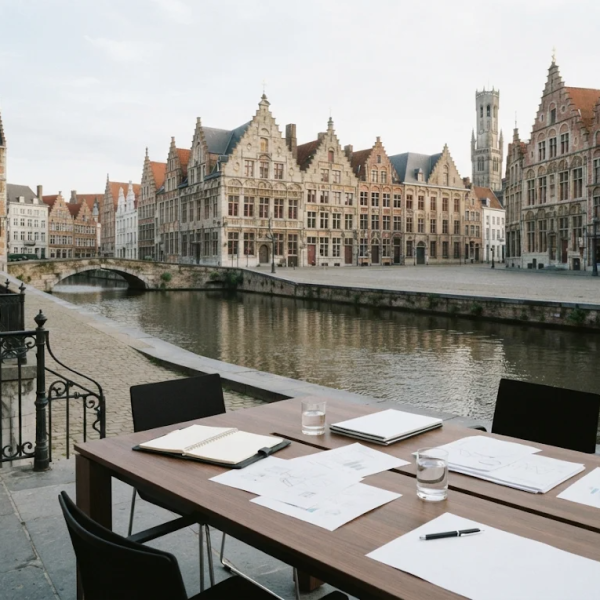
Belgium is a small country with a big economy, and Flanders, its Dutch speaking region, is home to ports, factories, logistics firms and a strong network of small businesses. Companies that sell to Flemish customers or hire local staff soon find that English alone is not enough. Flemish translation for business works best when the translator knows the local form of Dutch, uses the terms customers expect and keeps contracts, emails and websites consistent. This article gives practical tips for firms that work with Flemish partners.
Know what Flemish means
Flemish is the form of Dutch spoken in Flanders. Written texts follow the standard Dutch rules, but vocabulary, tone and some everyday words differ from the Netherlands. Tell the translator who will read the text.
Match the audience
A website for Flemish shoppers should sound local, and a contract may need more formal wording. A provider of flemish translation services can set the register for each document and keep it steady from page to page.
Use local business terms
Words for taxes, company forms, invoices and holidays are not always the same as in the Netherlands. Check each term against Belgian sources, so the text matches the law and the habits of the market.
Mind the other languages
Belgium also uses French and German, and many companies publish in several languages. Keep a clear list of which version applies to which region, and make sure that names and prices match everywhere.
Plan the workflow
Share glossaries, past documents and style notes with the translator before the work starts. Our article on English to Romanian translation explains how a simple review step and term list save time on repeat projects.
Keeping a consistent brand voice
Write a short voice guide with examples of friendly, formal and technical sentences. It helps translators match the tone of your brand across all texts for businesses working with Flemish partners.
Handling abbreviations
Abbreviations differ between English and German. Keep a list of those you use, spell them out on first use and agree whether the English form stays, so that readers are never left guessing.
Budgeting for several languages
If German is only the first of several languages, plan the process once. A shared glossary, a clear file structure and one coordinator keep costs and delays under control as you add markets for businesses working with Flemish partners.
Feedback after delivery
Send edited versions back to the translator after publication. Short comments on style and terms help the team improve, and the glossary for businesses working with Flemish partners grows with every approved text.
Planning time and cost
Plan translation early and ask for one quote that covers translation, review and delivery. A shared glossary lowers cost over time, because earlier terms and sentences can be reused in every new text for businesses working with Flemish partners.
Common mistakes to avoid
Typical problems include mixed spellings, untranslated labels, wrong dates and old figures left in updated files. A short checklist and one person responsible for approvals prevent most of these problems in businesses working with Flemish partners.
Choosing a translation partner
Look for experience with businesses working with Flemish partners, clear confidentiality terms and a named contact. Ask for a short sample and compare how each provider handles glossaries, questions and corrections.
Working with your provider
Share the purpose of each text, the audience and the deadline with every order. Answer questions quickly and approve key terms early, because a short call at the start often saves several rounds of corrections.
Glossaries and style guides
Write down the approved German term, a short definition and a note on words that stay in English. For businesses working with Flemish partners, this small list keeps every translator, editor and reviewer on the same page.
Names, dates and numbers
Check every name, date, amount and phone number against the source. German uses a decimal comma and writes dates as day, month, year, so numbers need a second look before anything is published.
Formal and informal address
German offers a formal and an informal way to address the reader. Decide which one suits your audience in businesses working with Flemish partners and use it everywhere, since a sudden change of tone looks careless.
Compound words and long sentences
German builds long compound words and nested sentences. A skilled translator splits them into clear English or builds them correctly in German, so that the meaning stays exact and the text is easy to read.
Review by a native speaker
A second reader who knows businesses working with Flemish partners can catch small errors that a first pass misses. This extra step is short, and it gives readers and partners more confidence in the final text.
Layout and file formats
Ask for delivery in the format of the source. Tables, headings, stamps and page numbers should stay in place, and German text is often longer than English, so layouts need some extra room.
Where to read more
For background on the language variety, see the Wikipedia article on Belgian Dutch, which covers its history and differences.
Recent Posts

Designing Websites That Work W...
Markenidentität entwickeln, d...

Refonte de site web, les étap...

Website Redesign Without Losin...

Perché Un Sito Su Misura Vale...

Pourquoi Le Branding Digital D...
Share it.
Links
We use cookies
We use cookies to give you the best online experience, remember your preferences, and understand how the site is used. You can accept all cookies, reject optional ones, or choose which categories to allow.
Privacy PolicyCookie preferences
Choose which cookies we can use. Necessary cookies stay on because the site cannot work without them.
For more details, read our Privacy Policy.